


What Is Chinese Food Therapy? How to Eat According to Traditional Chinese Medicine

In Chinese medicine, food is more than calories, protein, carbohydrates, and fat.
Food is medicine.
Long before we were counting macros, tracking glucose on our phones, or putting protein powder into absolutely everything, Traditional Chinese Medicine was looking at how individual foods affect the body.
Some foods warm us. Others cool us. Some nourish Blood and Yin, while others strengthen Qi, support digestion, or help clear Dampness.
And here's the part I love: the "healthiest" food isn't necessarily the healthiest food for you.
Your body, constitution, symptoms, season of life, and even the weather outside can influence what foods are most supportive.
This is the foundation of Chinese food therapy.
What Is Chinese Food Therapy?
Chinese food therapy is an ancient nutritional system based on the principles of Traditional Chinese Medicine (TCM).
Rather than looking at food exclusively through its vitamin, mineral, calorie, or macronutrient content, Chinese medicine also considers a food's energetic properties and how those properties influence the body.
Foods are classified according to characteristics such as their temperature, flavor, and the organ systems they support.
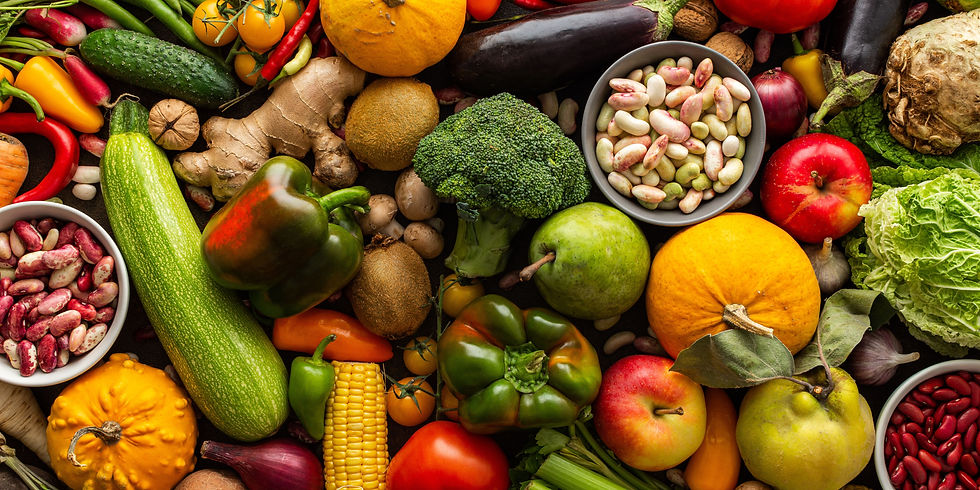
A cucumber and a piece of ginger, for example, have very different effects on the body.
Cucumber is cooling.
Fresh ginger is warming.
Neither one is inherently "better."
The question is:
Which one does your body need?
That's where Chinese food therapy becomes personalized.
Food Has a Temperature—and I Don't Mean Whether It's Hot
When I tell patients that foods have temperatures, I'm not talking about whether they just came out of the refrigerator.
Chinese medicine classifies foods as cold, cool, neutral, warm, or hot based on the effect they have on the body.
Watermelon, cucumber, and many raw fruits are considered cooling.
Ginger, cinnamon, lamb, and warming spices have a very different energetic effect.
Someone experiencing hot flashes, night sweats, and feeling overheated may need different foods than someone who is constantly cold, exhausted, and wearing socks to bed in Florida.
Yes, I have opinions about cold feet.
Chinese medicine usually does.

The Five Flavors in Chinese Medicine
Chinese food therapy also considers five primary flavors: sweet, sour, bitter, pungent, and salty.
Each flavor has different actions within the body and relationships with the organ systems of Chinese medicine.
This doesn't mean you need to sit at dinner wondering whether your broccoli is adequately supporting your Liver.
The bigger idea is balance and variety.
When we repeatedly eat the same foods or heavily favor one type of food, we may not be giving the body everything it needs.
Chinese medicine has always encouraged us to eat a diverse diet and adjust our food choices according to what's happening within the body.
Your Digestion Matters
One of the biggest differences between Chinese food therapy and many modern nutrition trends is the importance placed on digestion.
You can eat the most nutrient-dense diet in the world, but if your digestive system isn't processing it well, you're not getting the full benefit.
In Chinese medicine, the Spleen and Stomach are responsible for transforming food into the Qi and Blood the body needs.
When digestive function becomes weakened, you may experience bloating, fatigue after eating, loose stools, undigested food in the stool, poor appetite, brain fog, or a heavy feeling throughout the body.
This is one reason Chinese medicine frequently favors warm, cooked, easily digestible foods.
Smoothies, salads, iced coffee, and raw vegetables may look wonderfully healthy on Instagram.
Your Spleen may have a different opinion.
Why I Don't Recommend the Same Diet to Everyone
Nutrition has a tendency to swing from one extreme to another.
Low-fat.
Low-carb.
Paleo.
Keto.
Intermittent fasting.
Raw vegan.
Carnivore.
Somewhere along the way, we've developed the idea that there must be one perfect diet that everyone should follow.
Chinese medicine takes a completely different approach.
A food that's therapeutic for one person may aggravate another person's symptoms.
Someone with significant Spleen Qi deficiency and Dampness may benefit from warm, cooked meals and fewer cold, raw foods.
Someone experiencing Yin deficiency with hot flashes and night sweats may need more nourishing and cooling foods.
Someone with Blood deficiency may benefit from foods specifically chosen to build and nourish Blood.
Your diet should match your body.
Eating With the Seasons
Chinese medicine also encourages us to change the way we eat throughout the year.
Think about what naturally sounds appealing in January compared with August.
During colder months, warming soups, stews, roasted vegetables, and cooked foods tend to feel nourishing.
During hot weather, lighter and more cooling foods naturally become appealing.
Our ancestors didn't have strawberries shipped across the country in December or watermelon sitting in the grocery store year-round.
They ate according to the seasons because that's what was available.
Chinese medicine simply takes that natural rhythm one step further and asks us to consider how seasonal foods affect the body.

Chinese Food Therapy for Women's Health
This is where food therapy becomes especially interesting to me.
A woman's nutritional needs aren't static throughout her life.
The foods that support you in your 20s may not necessarily be the foods your body needs in your 40s and 50s.
Chinese medicine recognizes different stages of a woman's life and how changes in Qi, Blood, Yin, Yang, and Jing influence health.
Food can be intentionally used to nourish those substances.
This becomes particularly important during perimenopause and menopause.
Chinese Food Therapy for Perimenopause
Perimenopause isn't simply a period of declining estrogen.
From a Chinese medicine perspective, it's a transition involving changes in Kidney Jing, Yin, Yang, Blood, and the relationship between multiple organ systems.
And no two women experience it exactly the same way.
One woman may be burning up at night, throwing the covers off, and wondering why her bedroom suddenly feels approximately the temperature of the sun.
Another may feel exhausted, cold, bloated, and unable to lose weight.
Another may experience irritability, breast tenderness, headaches, and periods that have apparently decided calendars are optional.
They're all experiencing perimenopause.
But they're experiencing different patterns.
That's why I don't believe there should be one universal "perimenopause diet."
Eating for Hot Flashes and Night Sweats
In Chinese medicine, hot flashes and night sweats are frequently associated with Yin deficiency and deficient Heat, although other patterns can contribute.
Food therapy may focus on nourishing Yin and providing foods that are naturally moistening and cooling without overwhelming digestion.
The goal isn't to eat everything cold.
That's an important distinction.
A giant iced smoothie isn't necessarily the Chinese medicine solution to feeling hot.
We want to nourish Yin, not give your digestive system hypothermia.
Eating for Fatigue, Bloating, and Weight Gain
Another pattern I commonly see during perimenopause involves Spleen Qi deficiency and Dampness.
Women may notice increased bloating, fatigue, heaviness, digestive changes, brain fog, or weight that suddenly seems much easier to gain than lose.
In this pattern, Chinese food therapy may emphasize warm, cooked foods that support digestion while reducing foods that contribute to Dampness.
This is a completely different nutritional strategy from the woman experiencing significant Yin deficiency.
Same stage of life.
Different body.
Different food therapy.
Eating for Irritability and PMS
Hormonal changes during perimenopause can also aggravate Liver Qi stagnation.
This may show up as irritability, mood changes, headaches, breast tenderness, bloating, digestive changes, or feeling like everyone around you has suddenly become exceptionally annoying.
Sometimes they have.
But sometimes it's Liver Qi.
Food therapy for Liver Qi stagnation focuses on supporting the smooth movement of Qi while also addressing any underlying deficiencies.
Again, the pattern determines the strategy.
Dr. Stephanie's Tip: Stop asking whether a food is "healthy." Start asking: Is this food healthy for me right now?
That tiny change in thinking is one of the most important lessons Chinese food therapy teaches us.
A green smoothie can be packed with nutrients and still leave someone with Spleen Qi deficiency bloated, freezing, and wondering why their supposedly healthy breakfast isn't making them feel particularly healthy.
Meanwhile, a warm bowl of oatmeal with walnuts, berries, and cinnamon might be exactly what their body needs.
Nutrition doesn't have to be perfect.
It needs to make sense for your body.
Chinese Food Therapy Meets Modern Nutrition
I don't believe we have to choose between ancient Chinese medicine and modern nutritional science.
I use both.
Protein matters.
Fiber matters.
Blood sugar matters.
Micronutrients matter.
And the way a food energetically affects your individual constitution can matter too.
Chinese food therapy gives us another layer of information.
Instead of simply asking, "What nutrients are in this food?" we can also ask, "How does this food make my body feel?"
That's a much more interesting conversation.
Learning to Eat for the Body You Have Now
One of the biggest shifts that happens during perimenopause is realizing that what worked for your body ten years ago may not work anymore.
Your metabolism changes.
Your hormones change.
Your sleep changes.
Your stress tolerance may change.
And your nutritional needs change with them.
Instead of fighting those changes, Chinese food therapy gives us a way to work with the body during this transition.
That's exactly why I created my Perimenopause Food Therapy Guide.
I wanted women to have a practical way to understand Chinese food therapy and actually use it in everyday life—without needing a degree in Chinese medicine to figure out what to make for dinner.
The guide helps you identify the Chinese medicine patterns behind common perimenopause symptoms and choose foods that support your individual body, whether you're dealing with hot flashes, night sweats, fatigue, brain fog, digestive changes, mood changes, or other symptoms of this transition.
Because perimenopause isn't a disease.
It's a new stage of your body.
And learning how to nourish the body you have now can make that transition feel very different.
Ready to start using food as medicine? Explore my Perimenopause Food Therapy Guide and learn how to eat according to your symptoms, your Chinese medicine pattern, and this new season of your life.


Comments