


Congee for Digestion: A Simple Chinese Medicine Comfort Food

Updated: Sep 24
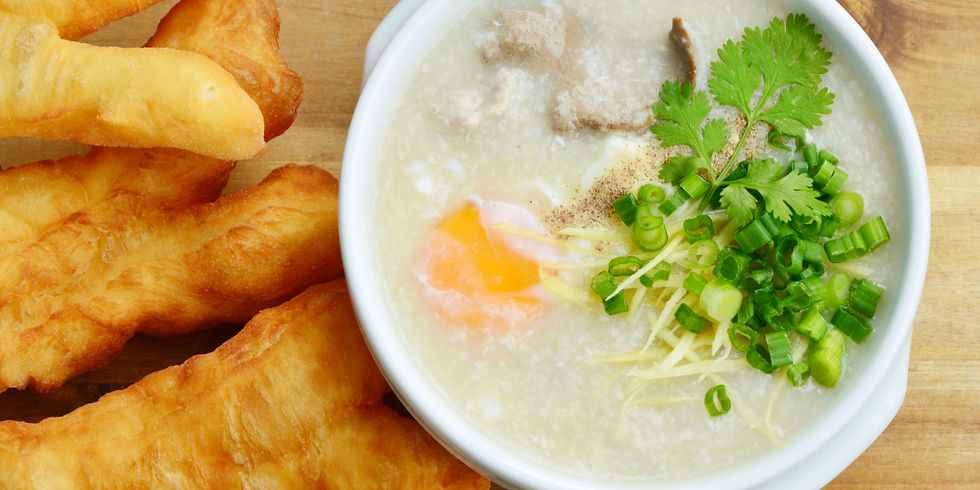
If your digestion feels a little off, sometimes the simplest foods are exactly what your body is asking for.
One of my favorites is congee.
Congee is a traditional rice porridge eaten throughout many parts of Asia, and it has been used in Chinese food therapy for centuries. It's made by slowly cooking rice with a generous amount of water or broth until the grains break down into a soft, creamy porridge.
It may not sound particularly exciting at first—I mean, we're basically talking about really well-cooked rice—but don't underestimate it.
Congee is one of those wonderfully versatile foods that can become whatever your body needs that day. You can keep it very simple when your digestion isn't happy, turn it into a savory meal with chicken, ginger and scallions, or make it into a warming breakfast with chicken maple sausage, cinnamon and nutmeg.
And from a Chinese medicine perspective, there's a reason I love it so much.
Why Congee Is Used in Chinese Food Therapy
In Chinese medicine, the Spleen and Stomach are responsible for transforming food into the Qi and Blood the body needs for energy, nourishment and overall health.
When digestion is struggling, we don't always want to make it work harder.
That's where warm, cooked foods come in.
Because congee is cooked for a long time with plenty of liquid, the rice becomes incredibly soft. This makes it a gentle option when you want something warm and easy to digest.
I especially like congee for people who tend to experience:
bloating
low appetite
loose or sluggish stools
digestive discomfort
fatigue
weakness after illness
poor appetite during periods of stress
postpartum depletion
It's also simply a wonderful breakfast during the cooler months when a smoothie or cold yogurt bowl doesn't sound particularly appealing.
Start With a Basic Congee
Think of this as your blank canvas.
Ingredients:
1 cup organic jasmine rice
6 cups filtered water
2 cups chicken broth or bone broth
½ teaspoon sea salt
1 tablespoon grass-fed butter, optional
Directions:
Rinse the rice thoroughly under cool water.
Add the rice, water, broth and sea salt to a slow cooker.
Cook on low for approximately 6–8 hours or overnight, until the rice has broken down and developed a soft, creamy consistency.
Stir well before serving. If you prefer a thinner congee, simply add additional warm broth until it reaches the consistency you like.
From here, you can keep it simple or turn it into a complete meal.
Savory Chicken, Ginger & Scallion Congee
This is probably my favorite version when I want something that feels like true Chinese comfort food.
Instead of making plain congee and simply putting shredded chicken on top, I like cooking chicken thighs and fresh ginger right into the congee. The chicken becomes incredibly tender while the ginger flavors the broth.
Ingredients:
1 cup jasmine rice
6 cups filtered water
2 cups chicken or bone broth
1–1½ pounds boneless, skinless chicken thighs
1–2 tablespoons freshly grated or thinly sliced ginger
½ teaspoon sea salt
3–4 scallions, thinly sliced
Coconut aminos, optional
Toasted sesame oil, optional
Fresh cilantro, optional
Directions:
Add the rice, water, broth, chicken thighs, ginger and salt to your slow cooker.
Cook on low for 6–8 hours.
Once the chicken is completely cooked and tender, remove it and shred it with two forks. Return the chicken to the congee and stir everything together.
Spoon into bowls and top generously with fresh scallions. If you like, finish it with a small splash of coconut aminos, toasted sesame oil or fresh cilantro.
Why I Love This Combination
From a nutrition standpoint, adding chicken thighs turns a bowl of rice porridge into a much more substantial meal by adding protein.
From a Chinese food therapy perspective, ginger is warming and has traditionally been used to support the Stomach and digestion. Scallions are also considered warming and dispersing.
It's a beautiful combination when you're craving something warm, savory and nourishing.
And if you've ever had homemade chicken soup when you weren't feeling your best, you'll understand the appeal immediately.
Breakfast Congee with Chicken Maple Sausage, Cinnamon & Nutmeg
Congee doesn't have to be savory.
This version has become one of my favorite ways to turn it into an easy warming breakfast.
Instead of a cold breakfast, you're starting the morning with warm rice porridge, broth, protein and warming spices.
For One Bowl
1 cup prepared congee
3–4 chicken maple breakfast sausages, sliced
¼ teaspoon cinnamon
Pinch of nutmeg
Additional warm chicken broth as needed
Optional additions:
1 egg
Chopped walnuts
Diced cooked apple
Small drizzle of maple syrup
Hemp hearts
Directions:
Prepare the chicken maple sausages according to the package directions and slice them into bite-sized pieces.
Warm approximately 1 cup of prepared congee in a small saucepan. Add a little extra chicken broth if you prefer a thinner consistency.
Stir in the cinnamon and nutmeg.
Add the sliced chicken maple sausage and allow everything to warm together for another minute or two.
That's it.
You get the slightly sweet maple flavor from the sausage with the warmth of cinnamon and nutmeg, but the breakfast still feels savory and substantial rather than like a bowl of sugary cereal.
If you need more protein, add an egg or increase the amount of chicken sausage.
Why Warm Breakfasts Can Feel So Good
Chinese medicine has traditionally emphasized the importance of protecting what we call Spleen Qi.
The Spleen in Chinese medicine isn't exactly the same thing as the anatomical spleen in Western medicine. It's part of a larger functional system associated with digestion and the transformation of food into nourishment.
This is one reason I often recommend experimenting with warm, cooked breakfasts for patients who tend to feel bloated, tired or uncomfortable after eating.
That doesn't mean everyone has to give up smoothies forever.
It simply means paying attention to how you feel.
If you notice that you feel better after oatmeal, eggs, soup or congee than you do after an icy smoothie first thing in the morning, your body is giving you useful information.
Make a Batch Once, Eat It All Week
One of the best things about congee is how easy it is to meal prep.
Make a large batch of plain congee in your slow cooker and store individual portions in the refrigerator.
As it sits, it will continue absorbing liquid and become thicker. When reheating it, simply add additional water, chicken broth or bone broth until it's creamy again.
Then you can change the flavor depending on what you want that day.
One morning might be chicken maple sausage with cinnamon and nutmeg.
The next day could be chicken, ginger and scallions.
You could also try:
shredded chicken + sautéed spinach
ground turkey + ginger
soft-boiled egg + scallions
cooked apple + cinnamon + walnuts
turkey sausage + cooked greens
leftover roasted vegetables + chicken
Once you stop thinking of congee as simply “rice porridge,” you realize it's really an incredibly versatile base for a warm meal.
Dr. Stephanie's Tip: If you're new to congee, start simple.
You don't need twelve toppings, five supplements and a complicated recipe to make a meal nourishing.
Start with rice, broth and a good source of protein. Then add ginger, vegetables, herbs or spices based on what sounds good and how your digestion feels.
And remember that Chinese food therapy isn't about eating perfectly.
It's about learning how different foods affect your body and using food intentionally to support how you want to feel.
Sometimes Simple Food Is the Best Food
We tend to make nutrition much more complicated than it needs to be.
There are times when colorful salads, elaborate recipes and a refrigerator packed with superfoods sound wonderful.
And then there are days when your body wants a warm bowl of rice, broth, chicken and ginger.
Both can have a place.
Congee is inexpensive, easy to prepare, endlessly customizable and deeply rooted in traditional Chinese food therapy. Whether you make the savory chicken and ginger version or turn it into breakfast with chicken maple sausage, cinnamon and nutmeg, it's an easy recipe to keep in your rotation—especially when you're craving something warm and comforting.
Want to Learn More About Chinese Food Therapy?
Food therapy is one of my favorite parts of Chinese medicine because food isn't simply about calories and macros. We can also look at temperature, preparation, digestion and your individual Chinese medicine pattern.
If you're in perimenopause and want to learn how to use these principles at home, my Perimenopause Food Therapy Guide walks you through the different Chinese medicine patterns, foods that support each pattern, shopping guides, lifestyle recommendations and 30 macro-balanced recipes.
And for more easy gluten-free and dairy-free recipes, you'll find 93 recipes in my cookbook, Allergy-Free Tastes Good to Me.
Healthy food doesn't have to be complicated. Sometimes it just needs to be warm, nourishing and something you'll actually want to eat.



Comments