


Put a Lime in the Coconut Shrimp Soup: An Easy Coconut Lime Shrimp Soup

Updated: Sep 7
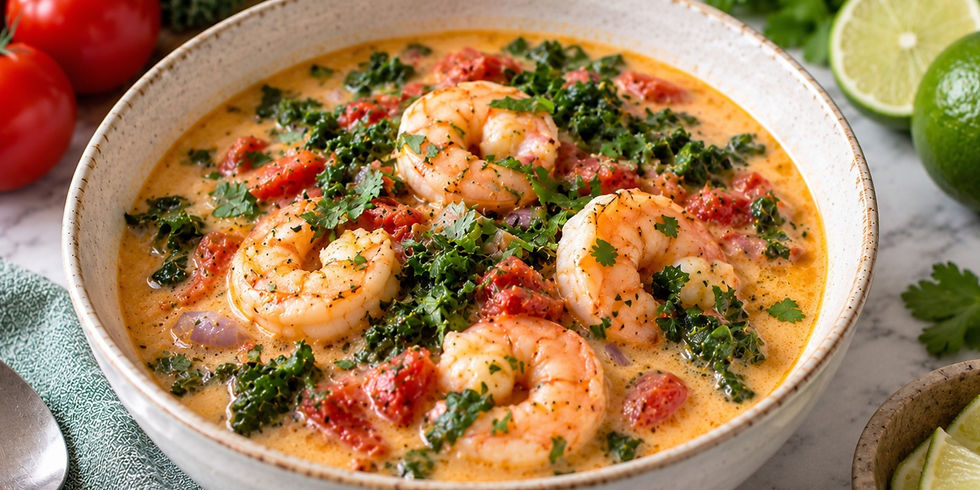
Yes, I named this soup after the song.
And now it's probably stuck in your head too.
This coconut lime shrimp soup combines creamy coconut milk, wild-caught shrimp, fire-roasted tomatoes, kale, fresh lime, garlic, coriander, turmeric, and marjoram for a warm, flavorful meal that comes together surprisingly quickly.
But there's another reason I originally created this recipe.
From a Chinese medicine perspective, I wanted to combine foods and herbs that could fit into a food therapy approach for Liver Qi stagnation—a pattern I commonly see when stress begins showing up physically in the body.
So while you can absolutely make this simply because it's delicious, there's a little Chinese food therapy thinking happening behind the scenes too.
What Is Liver Qi Stagnation?
If you tend to feel stressed, frustrated, tense, or like you hold everything inside until your body starts complaining about it, Chinese medicine may describe part of that pattern as Liver Qi stagnation.
In Chinese medicine, the Liver is responsible for helping Qi move smoothly throughout the body. When that movement becomes constrained, we may see a pattern that includes irritability, frequent sighing, tension beneath the ribs or across the chest, digestive symptoms that worsen with stress, PMS, breast tenderness, menstrual discomfort, or the sensation of having something stuck in the throat.
This doesn't mean that every stressed person has Liver Qi stagnation, or that these symptoms have only one explanation. Chinese medicine looks at the entire pattern before deciding what is happening.
But it's an incredibly common pattern in my practice.
Especially among women who are trying to do approximately 47 things at once.
Food Therapy Doesn't Have to Be Complicated
One of the things I love about Chinese food therapy is that it doesn't necessarily require unusual ingredients.
We can take familiar foods and think about them differently.
Instead of only asking, “How many calories does this have?” Chinese food therapy also considers whether a food is warming or cooling, how it's prepared, what organs and functions it traditionally influences, the season, and—most importantly—the person eating it.
That's part of what inspired this soup.
It's a warm, cooked meal filled with protein, greens, aromatic spices, and plenty of flavor.
Why I Use Shrimp
Shrimp makes this soup feel substantial without requiring a long cooking time.
It's a quality source of protein and provides nutrients including selenium, vitamin B12, iodine, and other minerals. Because shrimp cooks in just a few minutes, you can add it at the very end rather than simmering it for a long time.
That's important.
Overcooked shrimp has roughly the same appeal as a pencil eraser.
Two to three minutes is generally all you need once the shrimp goes into the simmering soup.
Coconut Milk Makes It Creamy
Coconut milk gives this soup its creamy texture without needing traditional cream.
It also balances the acidity of the tomatoes and lime and creates a rich base for the garlic, coriander, turmeric, and marjoram.
I use lite coconut milk in my original recipe, but you could experiment with full-fat coconut milk if you prefer a richer soup.
The combination of coconut and lime is really what makes this recipe.
There may even be a song about it.
Don't Forget the Kale
Four large handfuls of chopped kale may look like a lot when you first put it into the pot.
It isn't.
Like most leafy greens, kale dramatically reduces in volume as it cooks. Within a few minutes, those intimidating handfuls become tender greens distributed throughout the soup.
This is one of my favorite ways to eat more leafy vegetables because you don't have to prepare a separate side dish.
They're already in dinner.
Kale From a Chinese Food Therapy Perspective
Leafy green vegetables are commonly associated with the Liver in Chinese food therapy, which is one reason I like incorporating greens into meals designed around Liver patterns.
That doesn't mean kale is a treatment for a Liver condition. Chinese food therapy uses foods as part of a broader pattern-based approach rather than assigning one food to one disease.
The preparation matters too.
Someone who doesn't tolerate giant raw salads particularly well may find cooked greens much easier to incorporate into meals.
You don't get extra health points for forcing yourself to chew raw kale when you'd much rather eat it in coconut soup.
The Herbs and Spices Bring Everything Together
The combination of marjoram, coriander, turmeric, garlic, and lime gives this soup a warm, aromatic flavor without requiring an enormous spice cabinet.
Coriander brings a slightly citrusy quality that works beautifully with lime and coconut, while turmeric adds earthiness and color. Garlic provides its unmistakable pungency, and marjoram rounds everything out with a softer herbal flavor.
Then the fire-roasted tomatoes add another layer of richness.
It's a lot of flavor from a very simple ingredient list.
Put a Lime in the Coconut Shrimp Soup
This is my original recipe, and it's still wonderfully simple.
Ingredients:
½ red onion, diced
2 cloves garlic, minced
12 oz. frozen wild-caught raw shrimp, thawed
2 cans lite coconut milk
2 cups chicken stock
1 can organic fire-roasted tomatoes
4 large handfuls chopped kale
1 teaspoon marjoram
1 teaspoon ground coriander
Pinch of ground turmeric
1 teaspoon sea salt
Juice of 1 lime
1 tablespoon avocado oil
Directions:
Heat the avocado oil in a large soup pot over medium-high heat.
Add the diced red onion and sauté for approximately 3 minutes, until it begins to soften.
Add the minced garlic and cook for another minute, just until fragrant.
Pour in the coconut milk, chicken stock, fire-roasted tomatoes, and fresh lime juice. Add the marjoram, coriander, turmeric, and sea salt and stir everything together.
Bring the soup to a gentle boil, then reduce the heat and allow it to simmer.
Add the thawed raw shrimp and chopped kale. Cook for approximately 2–3 minutes, until the shrimp are opaque and cooked through and the kale has wilted.
Taste and add another squeeze of lime if you want a little more brightness.
Serve warm.
That's it.
Creamy coconut shrimp soup without spending your entire evening standing over the stove.
Can I Make This Soup Without Shrimp?
Absolutely.
In my original recipe, I suggested making it vegetarian by leaving out the shrimp and adding extra kale.
I'd make one additional change today: if you remove the shrimp, add another source of protein so the soup is still substantial enough to function as a meal.
You could experiment with tofu, edamame, or another protein you enjoy, and substitute vegetable stock for the chicken stock if you want the soup completely vegetarian.
Can I Use Full-Fat Coconut Milk?
Yes.
The original recipe uses lite coconut milk, which creates a lighter broth. Full-fat coconut milk will make the soup richer and creamier.
Neither choice automatically makes the soup “healthier.” Choose the one that works best for your nutritional needs and the texture you prefer.
Is This a Good Meal for Meal Prep?
Yes, although seafood requires a little more attention when reheating.
You can prepare the soup base ahead of time and add freshly cooked shrimp when you're ready to serve it. If you've already made the complete soup, reheat it gently rather than repeatedly boiling it so the shrimp don't become tough.
This is also one of those soups that develops even more flavor after the ingredients have spent some time together.
What Can I Serve With Coconut Shrimp Soup?
You can enjoy this soup on its own or serve it with rice, quinoa, or another whole-food carbohydrate if you'd like a more substantial meal.
Rice is especially good here because it absorbs the coconut-lime broth.
And no, I wouldn't automatically skip the rice simply because the soup already contains coconut milk.
Your carbohydrate needs depend on your body, activity level, appetite, and overall nutritional needs—not on whether a recipe once appeared on the internet with a “low-carb” label.
When Would I Use This From a Chinese Food Therapy Perspective?
I originally created this recipe with Liver Qi stagnation in mind, particularly for women who notice that stress and tension become more pronounced around their menstrual cycle.
In Chinese medicine, however, food therapy should always be individualized. Two people can have similar symptoms and still have very different underlying patterns.
That's why I think of recipes like this as a way to incorporate Chinese medicine principles into everyday eating rather than as a prescription.
Food can be supportive.
It can also just be delicious.
Ideally, it's both.
Dr. Stephanie's Tip: When you're making soup with delicate seafood like shrimp, add it last.
Build all of your flavor first. Sauté the onion and garlic, add your broth, coconut milk, tomatoes, lime, herbs, and spices, and let everything come together.
Then add the shrimp and kale during the final few minutes.
You'll get tender shrimp, properly cooked greens, and a flavorful broth without turning dinner into seafood-flavored rubber.
Everybody wins.
A Warm, Flavorful Meal Made With Real Food
Healthy eating doesn't have to mean grilled chicken and steamed broccoli every night.
Sometimes it can be a creamy bowl of coconut soup filled with shrimp, kale, tomatoes, garlic, lime, and aromatic spices.
This is exactly the kind of recipe I love because it combines nutrition, flavor, and Chinese food therapy principleswithout making healthy eating complicated.
And if you happen to sing “put the lime in the coconut” while you're cooking it?
I consider that part of the recipe.
Love Easy, Healthy Recipes Like This?
If you enjoy simple recipes made with real ingredients, you'll find plenty more in my cookbook, Allergy-Free Tastes Good to Me.
I created this cookbook to prove that eating gluten-free and dairy-free doesn't mean giving up the foods you love. Inside you'll find 93 delicious recipes for breakfasts, soups and stews, easy dinners, side dishes, snacks, and healthy treats—along with practical tips to make healthy eating easier in real life.
Because healthy food should still taste really good.


Comments